Remember the last time you actually finished your to-do list? Neither do I. If you run a WordPress business or a digital agency, your day probably feels like a constant race against a treadmill that’s moving just a little too fast. You’re juggling content creation, SEO updates, client emails, and social media posts, all while trying to actually grow the business. It’s exhausting, isn’t it?
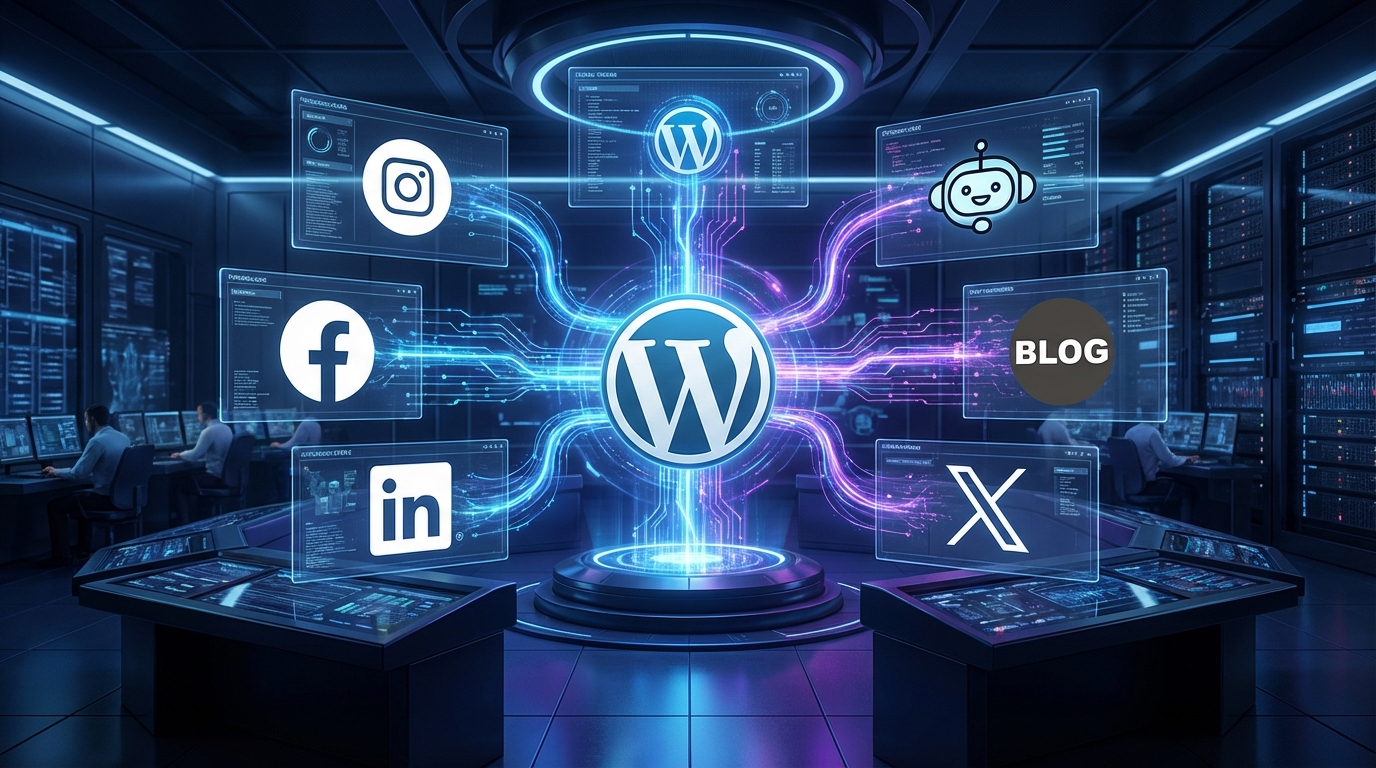
But what if I told you that the goal isn’t to run faster, but to step off the treadmill entirely? We are currently witnessing a massive shift in how we approach digital work. We aren’t just using AI tools anymore; we are building autonomous teams. Imagine your WordPress site not as a static brochure, but as a bustling digital office where specialized AI agents work 24/7—writing, optimizing, selling, and even recruiting—while you focus on the big picture. Let’s grab a coffee and talk about how you can transform your website from a passive asset into a self-sustaining marketing ecosystem.
From tool users to team leaders
Here is a question to chew on: how many tabs do you have open right now? I’m willing to bet it’s a lot. We have become accustomed to being the operator of a dozen different tools. We log in, we click buttons, we copy-paste prompts, and we review the output. It’s better than doing it all from scratch, sure, but it’s still manual labor. You are still the bottleneck.
The difference with the new wave of AI agents—like the ones we develop at SynergizeFlow—is autonomy. An AI agent doesn’t wait for you to click ‘generate’. It observes, it decides, and it acts based on the parameters you set. It’s the difference between a hammer and a carpenter. You use a hammer; you hire a carpenter. By integrating these agents directly into your WordPress environment, you stop being a tool user and start becoming a team leader. You define the strategy, and your digital workforce executes it.
The content architect: scaling without the spam
Let’s talk about the elephant in the room: content. We all know we need more of it. Google demands freshness, and your audience demands value. But writing high-quality blog posts day in and day out is a quick recipe for burnout. This is where programmatic SEO and AI content automation come into play, but perhaps not in the way you think.
Forget about spinning thousands of low-quality, spammy pages. That strategy is dead. Instead, think of an AI agent as your dedicated Content Architect. This agent can analyze your niche, identify low-competition keywords, and intelligently update your existing posts to keep them relevant. It can construct new, value-rich articles based on data structures you approve. It’s not about flooding the web; it’s about building a library of helpful answers that scales with your business. When you employ a smart programmatic strategy on WordPress, you’re essentially planting a garden that weeds and waters itself.
The 24/7 sales representative
How many leads have you lost because you didn’t reply to an inquiry within five minutes? It hurts to think about. In our hyper-connected world, speed isn’t just a luxury; it’s a requirement. But you can’t be awake 24 hours a day, and hiring a round-the-clock sales team is prohibitively expensive for most agencies.
Enter the AI Sales Agent. Unlike a basic chatbot that frustrates users with rigid decision trees, a true AI agent can understand context, answer complex questions, and even handle objections. It lives on your WordPress site, engaging visitors the moment they arrive. It qualifies them—asking the right questions to see if they’re a good fit—and then books appointments directly into your calendar. It’s like having your best salesperson manning the front desk at 3 AM on a Sunday, ensuring that no opportunity slips through the cracks.
The social media distribution engine
Creating content is only half the battle; distributing it is the other half (and often the more tedious one). You write a great case study, and then you have to format it for LinkedIn, shorten it for Twitter, and find a visual for Facebook. It’s a friction point that often leads to great content gathering dust.
Imagine if your WordPress site handled this for you. As soon as a post goes live, your Social Media Agent kicks into gear. It reads the content, understands the key takeaways, and crafts platform-specific posts that sound like you. It schedules them for optimal times and even monitors engagement. This isn’t just automation; it’s syndication. It ensures your brand has a pulse across the entire web, driving traffic back to your site without you having to lift a finger.
The hidden growth lever: automated recruitment
This is where things get really interesting, and it’s an area most business owners overlook. Growth often requires people—real human talent. But finding that talent is a massive time sink. Sifting through LinkedIn profiles and reading resumes can take weeks.
What if your WordPress site could help you hire? A specialized Recruitment Agent can proactively scour platforms like LinkedIn to find candidates who match your exact criteria. It can initiate the first contact, gauging interest and availability before you ever step in. By automating the top of the hiring funnel, you ensure that you’re only spending your valuable time interviewing serious, qualified candidates. It’s a powerful way to scale your human team alongside your AI one.
Stepping into your new role
So, where does this leave you? If your website is writing its own content, selling to its own leads, and managing its own social media, are you obsolete? Absolutely not. You are more essential than ever.
When you automate the execution, you elevate your role to strategy and relationships. You finally have the mental space to think about why you’re doing what you’re doing, rather than just how to get it done by 5 PM. You can focus on nurturing high-level partnerships, developing new service offerings, and steering the ship. This transition to an AI-powered marketing ecosystem isn’t just about efficiency; it’s about reclaiming the joy of building a business. It’s about letting your WordPress site work for you, instead of the other way around.