Remember the last time you stared at a blank WordPress post, blinking cursor mocking you, knowing you needed to write *something* to keep the Google gods happy? We’ve all been there. It’s that feeling of being on a content treadmill where if you stop moving, your traffic stops too. But what if I told you that the way we think about WordPress is changing fundamentally? It’s no longer just a place to publish what you write; it’s becoming a place that writes, optimizes, and promotes for you.
We are moving away from the era of manual plugins and into the age of the self-sustaining content ecosystem. Imagine your website not as a digital brochure that gathers dust unless you polish it, but as a living, breathing entity that grows on its own. It sounds like science fiction, but with the right AI agents, it’s actually the new standard for smart business owners. Let’s grab a coffee and chat about how you can turn your static site into an automated growth engine.
Breaking free from the content treadmill
Let’s be honest for a second: the old way of doing content marketing is exhausted. You do keyword research, you write a draft, you find images, you struggle with SEO meta tags, and then you pray someone sees it after you hit publish. It’s a grind. And for busy business owners or agencies managing multiple clients, it’s a grind that often gets pushed to the bottom of the to-do list.
The problem isn’t that you lack ideas; it’s that you lack the bandwidth. Traditional automation tools helped a little—maybe scheduling a post or checking your grammar—but they still required *you* to be the engine. You were still the one pushing the car up the hill. Breaking free means realizing that your time is too valuable to be spent on the assembly line. You need to be the architect, not the bricklayer. When you shift your mindset from “I need to write a post” to “I need to build a system that writes posts,” everything changes.
The shift to an autonomous ecosystem
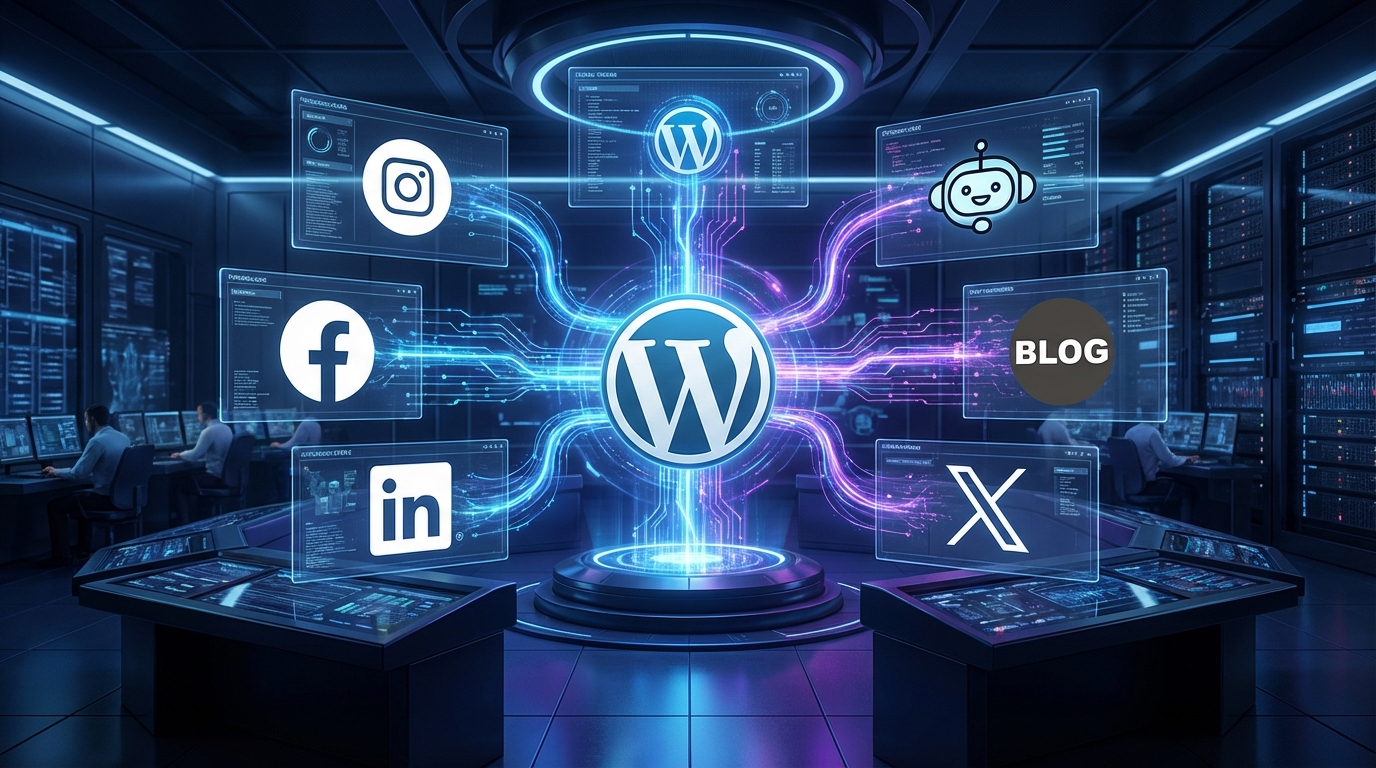
So, what do I mean by an “autonomous ecosystem”? It’s the difference between a tool and an agent. A tool waits for you to click a button. An agent observes, thinks, and acts based on goals you set. In a self-sustaining WordPress ecosystem, specialized AI agents talk to each other. One agent might spot a trending topic, another drafts the content, a third optimizes it for search engines, and a fourth shares it on social media.
This isn’t about replacing human creativity; it’s about amplifying it. It’s about having a team of experts working 24/7 inside your dashboard. Platforms like SynergizeFlow are leading this charge by integrating these specialized agents directly into WordPress. Instead of stitching together ten different plugins that barely speak to each other, you have a unified flow where content creation, SEO, and lead gen happen in harmony. It’s cleaner, faster, and honestly, a lot less stressful.
Programmatic SEO: Your silent traffic engine
Here is where things get really interesting. You might have heard the term “programmatic SEO” thrown around in technical circles, making it sound scary and complex. But strip away the jargon, and it’s actually a simple, powerful concept. Instead of writing one article to target one keyword, you use data to generate hundreds of highly specific, valuable pages automatically.
Think about it: if you run a travel agency, you don’t want to just rank for “best hotels.” You want to rank for “best hotels in Paris for families,” “best hotels in London for couples,” and so on. Writing those thousands of variations manually would take a lifetime. With an AI-driven programmatic approach, you set the structure, and the system fills in the blanks with unique, helpful content. It’s like casting a net the size of the ocean instead of fishing with a single line. This is a core part of how SynergizeFlow helps you dominate a niche without hiring an army of writers.
The social loop: Posting without the panic
Great content is useless if nobody sees it, right? But let’s face it, social media management is a full-time job. You have to resize images, write catchy captions, figure out hashtags, and remember to post at the right time. In a self-sustaining ecosystem, this loop is closed automatically. Your website should know when a new post is live and instinctively know how to share it.
Imagine an agent that reads your new blog post, understands the key takeaways, and crafts a perfect LinkedIn post, a punchy X (Twitter) thread, and an engaging Facebook update. It schedules them, posts them, and even monitors the engagement. You stop being a slave to the relentless social media feed. You can finally focus on running your business while your WordPress site handles the noise, keeping your brand top-of-mind across all platforms effortlessly.
Turning traffic into conversations
Traffic is vanity; conversions are sanity. That’s an old marketing saying, but it’s true. You can have a million visitors, but if they bounce, you’ve gained nothing. A truly self-sustaining site doesn’t just attract people; it greets them. This is where the chat agent comes in—not those annoying “click here” popups, but an intelligent concierge that understands your business.
When a visitor lands on your newly generated article, they might have a question. A human can’t be there at 3 AM, but an AI agent can. It can qualify leads, answer specific questions about your services, and even book appointments directly into your calendar. It turns passive readers into active prospects while you sleep. By integrating this deeply into your WordPress setup, you ensure that the traffic your content generates actually impacts your bottom line.
The human role: From writer to director
You might be wondering, “If AI does all this, what do I do?” That is the most exciting part. You get a promotion. You stop being the writer, the editor, the SEO specialist, and the social media intern. You become the Director. Your job shifts to strategy, voice, and oversight.
You define the brand’s personality. You tell the agents who your target audience is. You review the performance data and tweak the dials. You provide the creative spark that the AI fans into a flame. It’s a much more fulfilling way to work. You are still the captain of the ship; you just have a really, really good autopilot system handling the navigation and the engine room. This shift allows you to focus on high-level growth and relationships—the things AI can’t replace.
Why agencies can’t ignore this shift
If you run a digital agency, this isn’t just a cool trick; it’s a survival strategy. Clients are demanding more output for less budget. They want speed, they want scale, and they want results. The old model of billing hourly for manual blog writing is fading. By adopting a white-label solution like the one SynergizeFlow offers, you can provide an entire marketing department’s worth of value to your clients at a fraction of the cost.
You can offer them a “growth engine” rather than just a “website.” You can scale your own services without burning out your team. It allows you to move from being a service provider to a strategic partner. The agencies that embrace this ecosystem approach will be the ones that thrive, while those sticking to manual grinding will struggle to keep up. It’s a brave new world, and it’s time your WordPress site joined it.